The direct answer
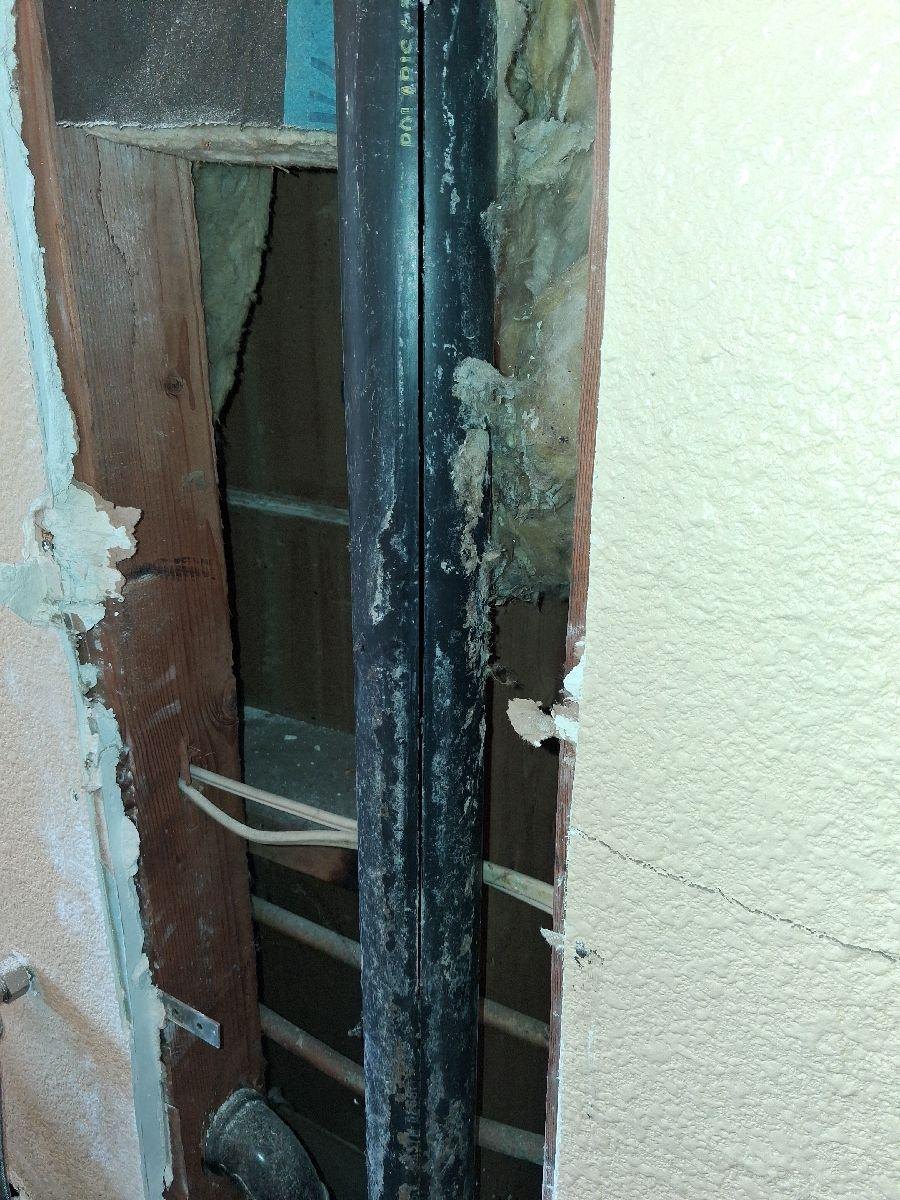
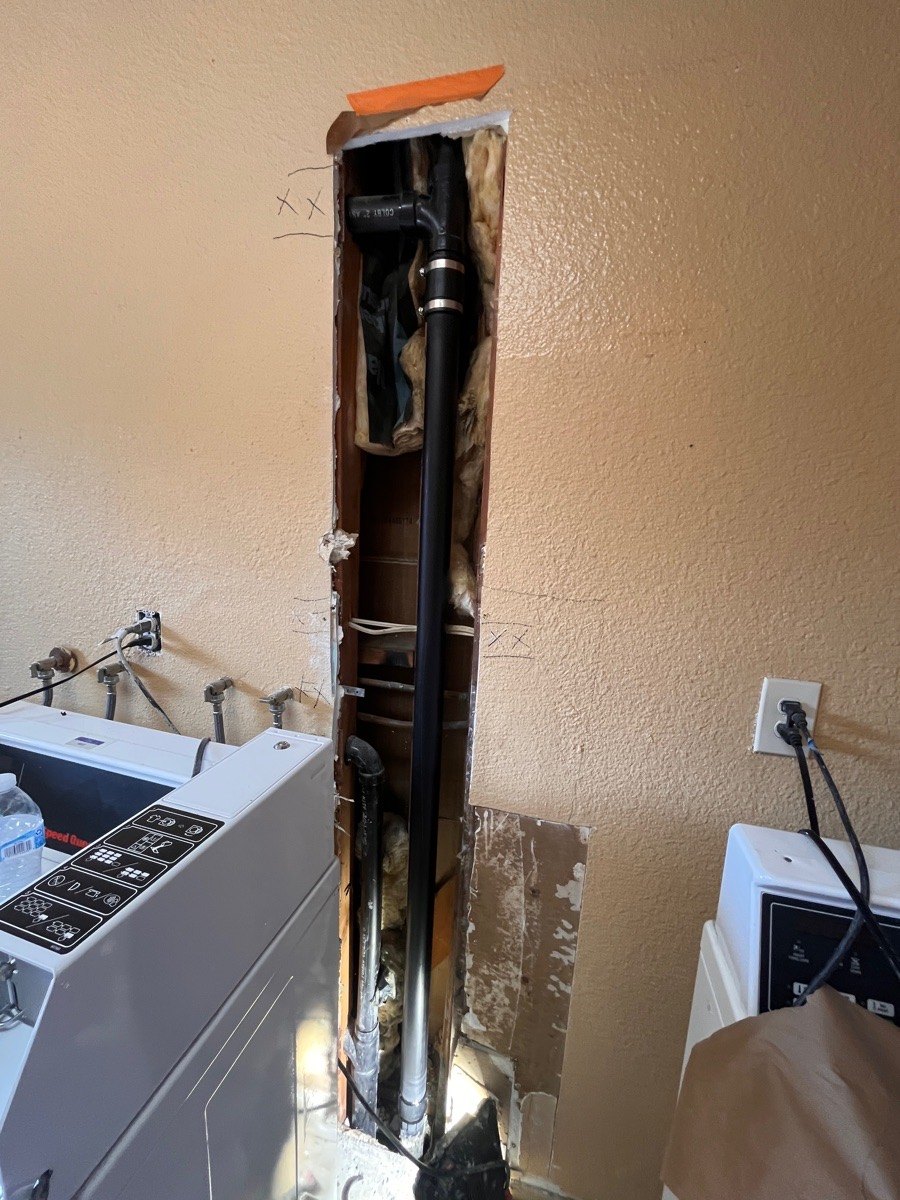
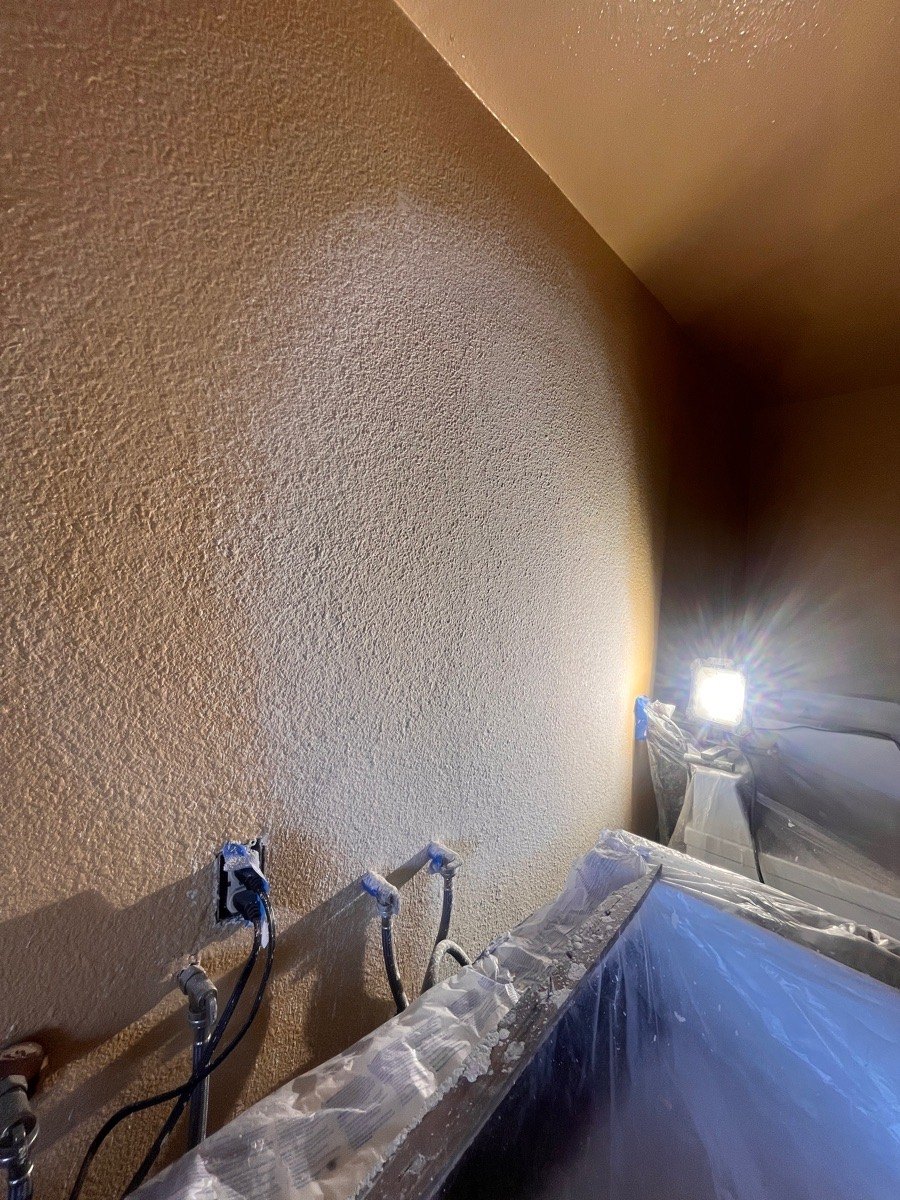
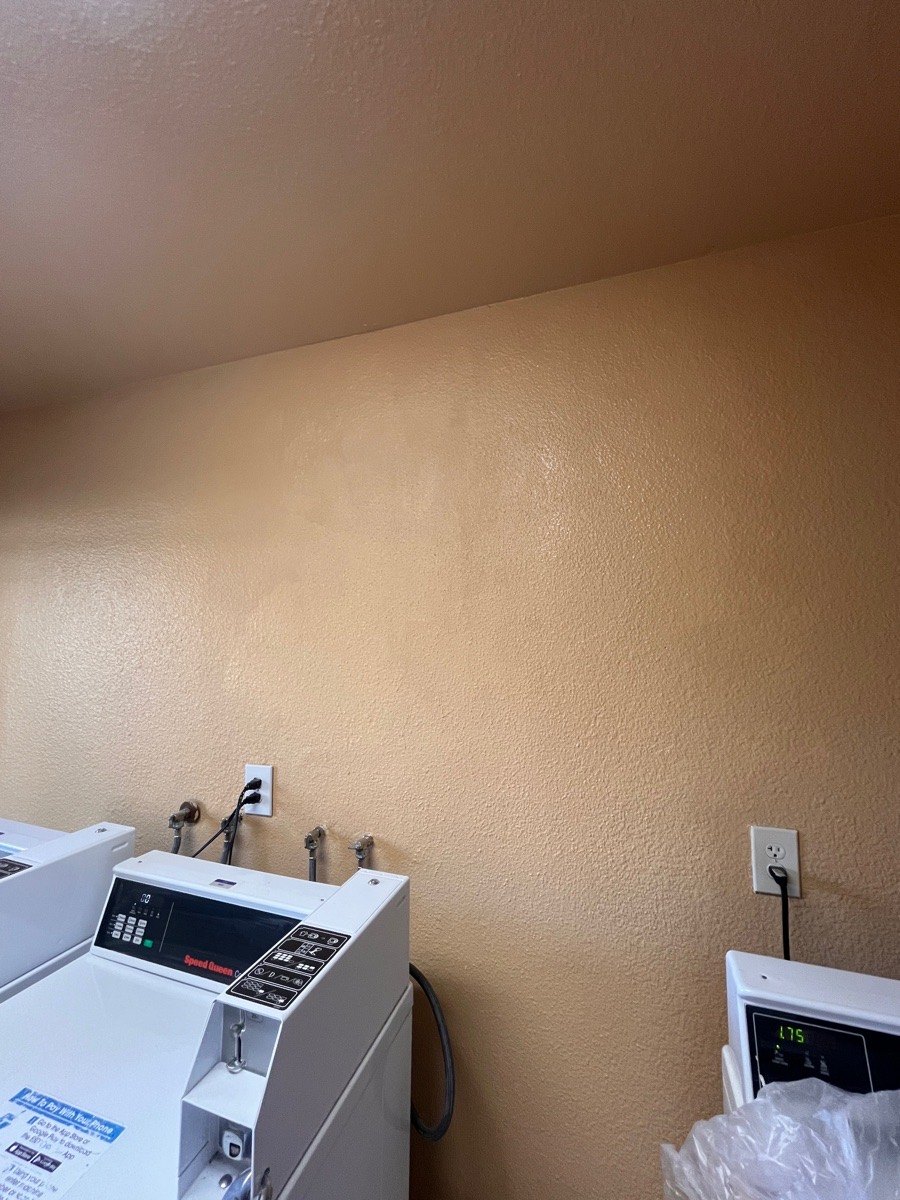
This AWC example records cracked drain, waste and vent piping in an open laundry-room wall, a later piping stage, wall restoration and a painted finish. It documents a repair sequence. It does not document clearing a restriction or prove the cause of a different property’s backup.
Start with the accessible pipe condition
The first photograph shows the exposed cracked pipe at the access opening. It identifies the visible condition the repair sequence addresses. A crack in this record is not evidence that a visitor’s recurring slow drain has the same cause. That question needs its own inspection and scope.
Keep the pipe and finish records connected
The later images show restoration work at the opening, then a painted wall. These stages are useful because a plumbing repair alone does not necessarily include backing, board, texture, primer or paint. The proposal should state which materials and visible finish boundary are included.
Name what the images do not establish
The public sequence does not supply a test method, inspection result, customer acceptance or long-term performance record. It also does not establish a clog-clearing service, a sewer replacement or a project location. Those are separate claims that need their own evidence.
Apply the lesson to your drain repair
Ask what supports the proposed pipe endpoints, how the work will be verified, who releases the opening for closure and where the finish stops. If an opening reveals a wider condition, agree on the changed scope before it proceeds.
When comparing prices, put the pipe stage and restored-room stage side by side. A clearly documented repair boundary is more useful than a broad label such as “fix the drain.”
Sources & further reading
- AWC: Drywall Need To Be Opened After A Leak?
- AWC City Heights Plumbing: recurring clogs and camera inspection
Codes, product instructions and local requirements vary by assembly, permit and jurisdiction. Confirm the applicable requirements for the property.
Make the next conversation useful.
Start with a wide view, a close view, when the condition occurs, and what has already been tried. Keep customer names, access codes and unrelated private records out of photos.
Plan the evaluation →